
Conference archive

2025 Annual Conference

August 31, 2025 – September 2, 2025 Donald E. Stephens Convention Center, Rosemont, Chicago, IL

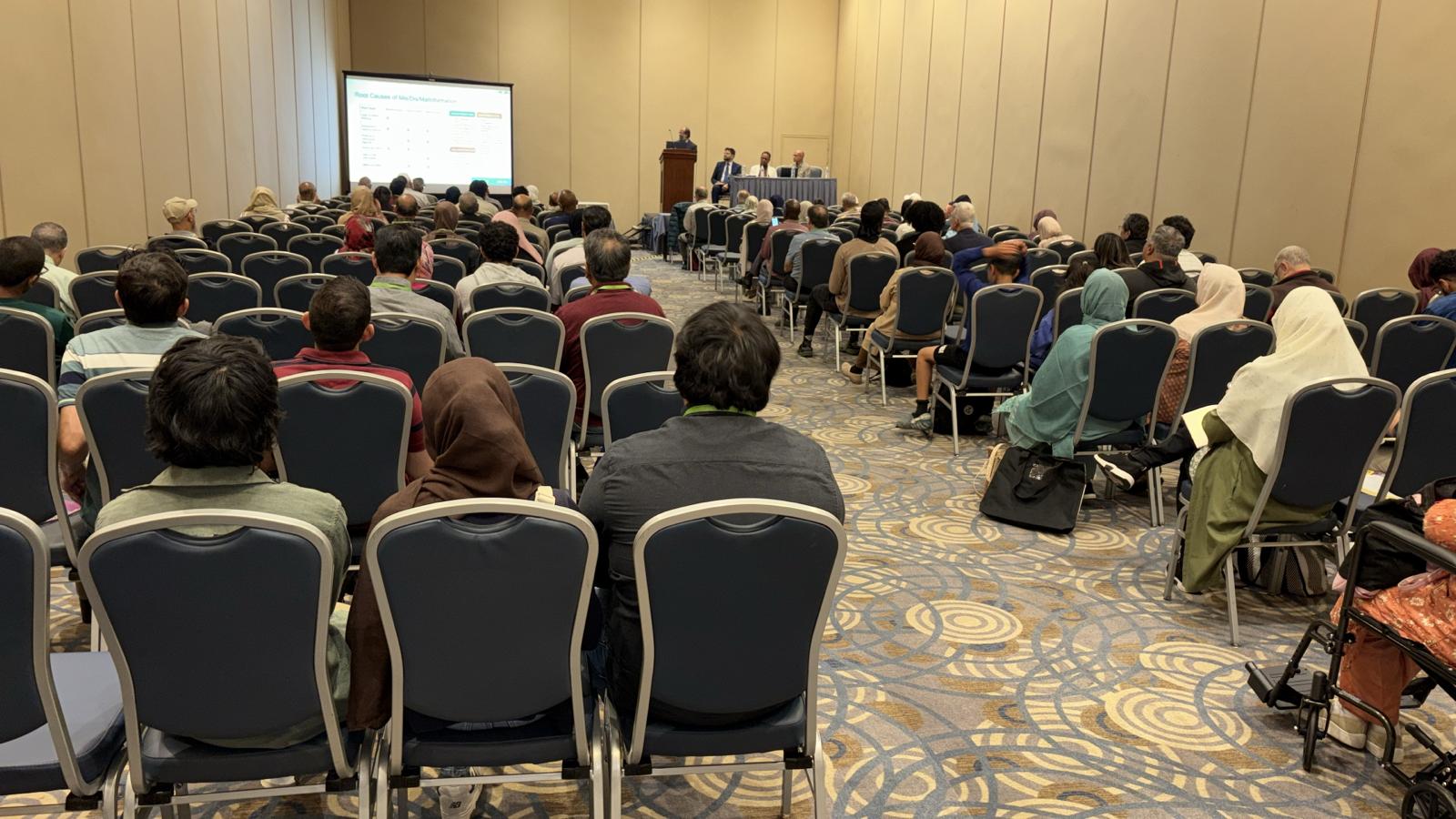
Conference photo

Session 1 · Monday, September 1, 2025 · 11:30 AM

Artificial Intelligence (AI) for Social Good: Standing up for Truth in times of misinformation/disinformation

Moderator: Rasheed Rabbi

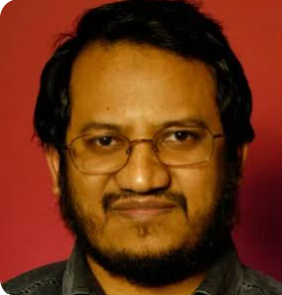
Farid Ahmed PhD

Artificial Intelligence (AI) for Social Good: Standing up for Truth in times of misinformation/disinformation

Misinformation/Disinformation is perhaps the most critical challenge humanity is facing today. Truth is under attack—even the definition is getting blurred. Weapons of mass deception and mass manipulation are taking a heavy toll in our lives that manifest in a variety of ways– from mischaracterization, misinterpretation, to blatant lies, leading to misunderstanding, mishap, and mischief. Emerging technologies like AI/ML, coupled with social media virals are making the situation even worse. This panel discussion will focus on how AI/ML

Speaker biography

Dr. Farid Ahmed is a researcher at Johns Hopkins University Applied Physics Laboratory and an adjunct professor at JHU's Whiting School of Engineering. Formerly, he was an associate professor at the Catholic University of America. His expertise includes AI/ML, cybersecurity, and signal/image processing. He is the Founding President of the American Institute of Integrated Thought (AIIT) and Executive Director of the Institute of Research and Education Assisted Development (IREAD), focusing on youth empowerment and holistic development.
Tahir Saif PhD

Biophysics of Cancer Tumors

This talk will explore the physical properties and mechanical forces within and around tumors, revealing how these factors influence cancer development, growth, and spread. This talk will also shed light on how mechanical forces, cell stiffness, and the tumor microenvironment interact to affect cancer cell behavior and metastasis.

Speaker biography

Prof. Taher Saif is the Gutgsell Professor of Mechanical Science and Engineering at the University of Illinois at Urbana-Champaign. His current research includes tumor microenvironment, mechanics of neurons and cardiac cells, and the development of biological machines, amongst others.

Shameem Ahmed PhD

How Technology Can Identify and Nurture Autism Strength

In the USA, approximately 1 in 31 children (3.2%) are diagnosed with Autism Spectrum Disorder (ASD), which is a neurodevelopmental disability and one of the most common forms of neurodivergence. The autistic
community is highly diverse, representing all demographics including age, religion, gender, ethnicity, education, and socio-economic status. Historically, autism has often been viewed as a “weakness”, “burden”, or “epidemic” that needs to be “cured.” Our research team argues that autistic individuals possess unique strengths, skills, and talents that can be immensely beneficial to society. As a society, we need to give them a safe and encouraging environment where they can explore their own strengths and fulfill their dreams. In this talk, I will present how to identify and nurture those strengths, as well as how technology can assist in this process.

Speaker biography

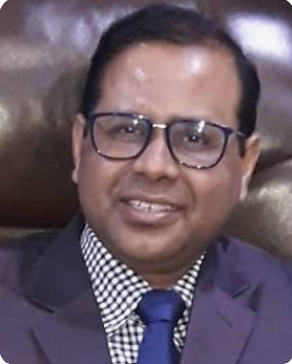
Dr. Shameem Ahmed is an Associate Professor at Western Washington University (WWU) & Department of Computer Science. He is the co-founder of the Neurodiversity initiative at WWU. He is also the co-founder and co-director of the NEAT (Next Generation Effective Affective Technology) research lab, an interdisciplinary research group with researchers, students, and practitioners from multiple disciplines and countries. Many of the team members are autistic themselves or have autistic family members. The primary research focus of Dr. Ahmed and his team is designing computer technology for neurodivergent individuals using the Human-Computer Interaction (HCI)
approach. They also utilize cutting-edge computer technology (e.g., AI, LLMs, wearable devices, mobile devices, and web-based platforms) to conduct empirical studies, aiming to understand the challenges and perspectives of neurodivergent individuals in their daily lives.